
Sumner Warrant Checks
Every Sumner warrant check starts with one question. Where did the case begin? The town website posts no police department page, no municipal court page, and no warrant lookup. No ticket portal appears either. The gap does not erase the local court or police function. Town Hall stays the best verified place to ask who now holds a Sumner citation or a failure-to-appear record. County matters and unknown cases then go to the Worth County Sheriff or the proper county court.
- Read the citation or notice for an issuing agency, court, case number, and date.
- Call Sumner Town Hall at 229-776-7384 and ask which current office handles the matter.
- Ask whether the file shows a citation, FTA order, bench warrant, arrest warrant, or another process.
- For a county matter or unclear issuer, call the Worth County Sheriff at 229-776-8211 or State Court at 229-776-8205.
- Before appearing, ask about identification, custody, bond or recall instructions, and whether counsel should call first.
Georgia has no statewide warrant database. A direct reply from the record holder beats any unrelated database hit, even for a Sumner case. Write down the official's name, the check date, the exact status given, and the next step.
Sumner Warrant Web Gap
The Town of Sumner website gives a verified address, a telephone number, and business hours. It posts no public warrant page. No city ticket search appears either. The City Hall page names town officials. Still, Sumner publishes no police or municipal-court page, and that web gap is not proof that no department, court, or local process exists.
Web gap: Ask Town Hall to identify the current custodian before sending records or payment information anywhere.
A broad web result can point to an old office, a vendor, or a different jurisdiction. Use the official Sumner town number instead. Staff can route the call. Take county cases to the named Worth County office. For a city-level matter, ask the clerk for a current contact and how status can be confirmed. Note: A missing web page does not establish that a Sumner warrant is absent, cleared, or handled by another court.
Policing and Courts in Sumner
Sumner publishes no official police department or municipal court page. Assume nothing. No department name, municipal judge, clerk phone, or court calendar can be taken for granted. No local warrant desk is listed anywhere. Town Hall answers the threshold question: which office now handles a town citation, a missed appearance, or a request for a local record? A judge or authorized judicial officer issues a warrant. Law enforcement then serves it. A clerk keeps the related court file and can explain the procedures the court publishes. Those jobs can sit with separate offices even in a small town. Ask for the full name of each court and agency rather than saying "the city." If Town Hall routes a matter outside Sumner, confirm it with the named office. Worth State Court handles county misdemeanor and traffic cases. Worth Magistrate Court handles warrant applications. The Worth County Sheriff handles county warrant service. Living in Sumner does not decide which office controls a case.
Sumner Town Hall Warrant Routing
Sumner's verified public contact is Town Hall at 706 Walnut Street, Sumner, Georgia 31789. The phone number is 229-776-7384. Published hours run Monday through Friday, 9:00 a.m. to 5:00 p.m. The office closes from 12:30 p.m. to 1:30 p.m. Those are town-office hours only. They set no court calendar, warrant-counter schedule, or officer availability. The official Sumner contact page shows the address, number, and hours.
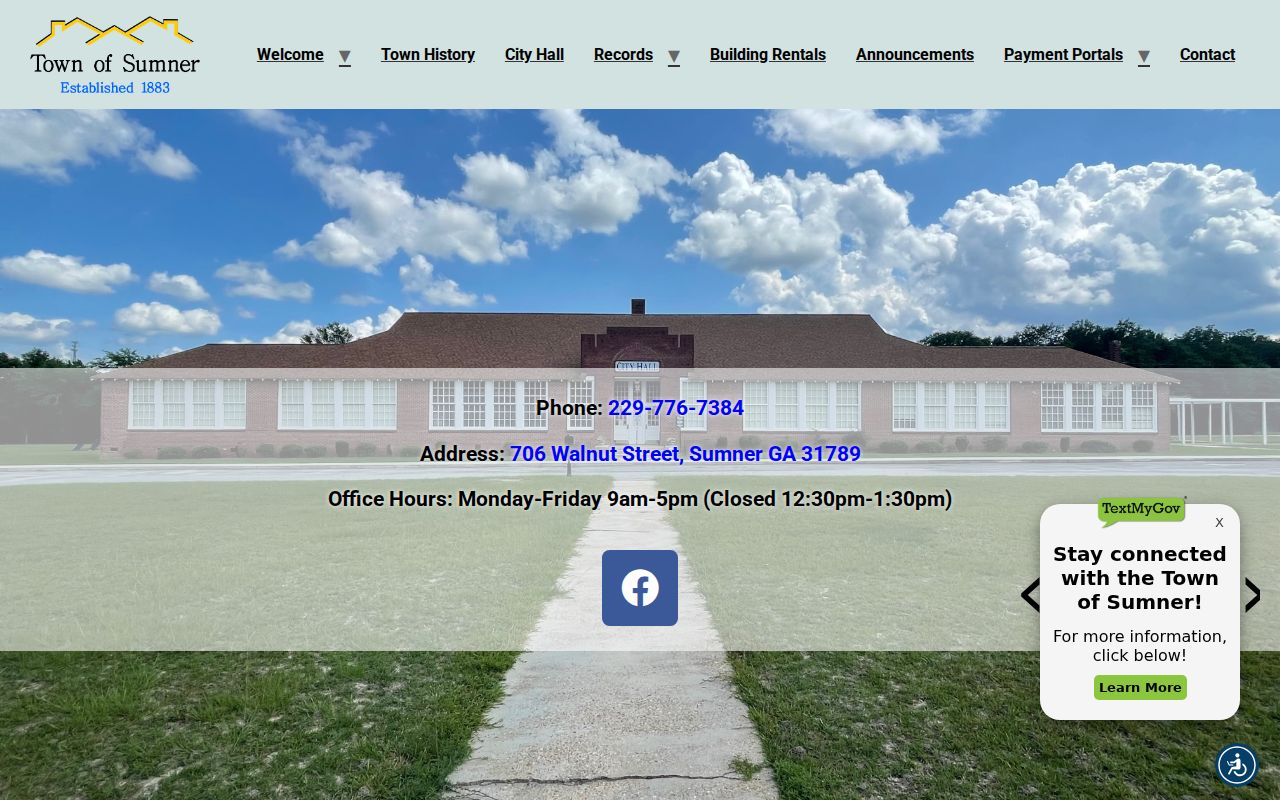
Make the first call practical. Ask whether the town keeps the citation or FTA file, which office holds it, and whether a phone inquiry is enough. If a visit is needed, confirm the right time and identification before you travel to Sumner. Keep the request narrow. Give only the identifiers staff ask for. Do not send a license image, Social Security number, or other sensitive document through ordinary email without a confirmed need and a secure method.
Warrants in Sumner: The Main Types
The document's name controls the route. A town citation and a county arrest warrant are different records. An FTA order can follow a missed required date. An arrest warrant rests on a judicial finding of probable cause, and a search warrant authorizes a search for evidence rather than listing people. No Sumner court page defines local terms. Ask the record holder to read the exact label on the document.
| Record type | How it may arise | First verified route |
|---|---|---|
| Town citation process | A traffic or ordinance matter attributed to Sumner | Town Hall for current routing |
| FTA or bench warrant | A required setting was missed | The issuing court clerk |
| Arrest warrant | A judicial officer finds probable cause | Issuing court and serving agency |
| Search warrant | A judge authorizes an evidence search | Issuing clerk or records custodian |
Worth State Court's FAQ uses the term "failure to appear" order. It warns that missing court or failing to pay bond can bring an FTA order and license suspension. Worth County describes no Sumner capias pro fine process. Do not hang that label on every old ticket.
Sumner Officers and Warrant Custody
The official City Hall page names Sumner's mayor, council, and clerk in public roles and shows the town building. It posts no active-warrant roster. No police warrant portal, municipal case search, or ticket-payment link appears there.
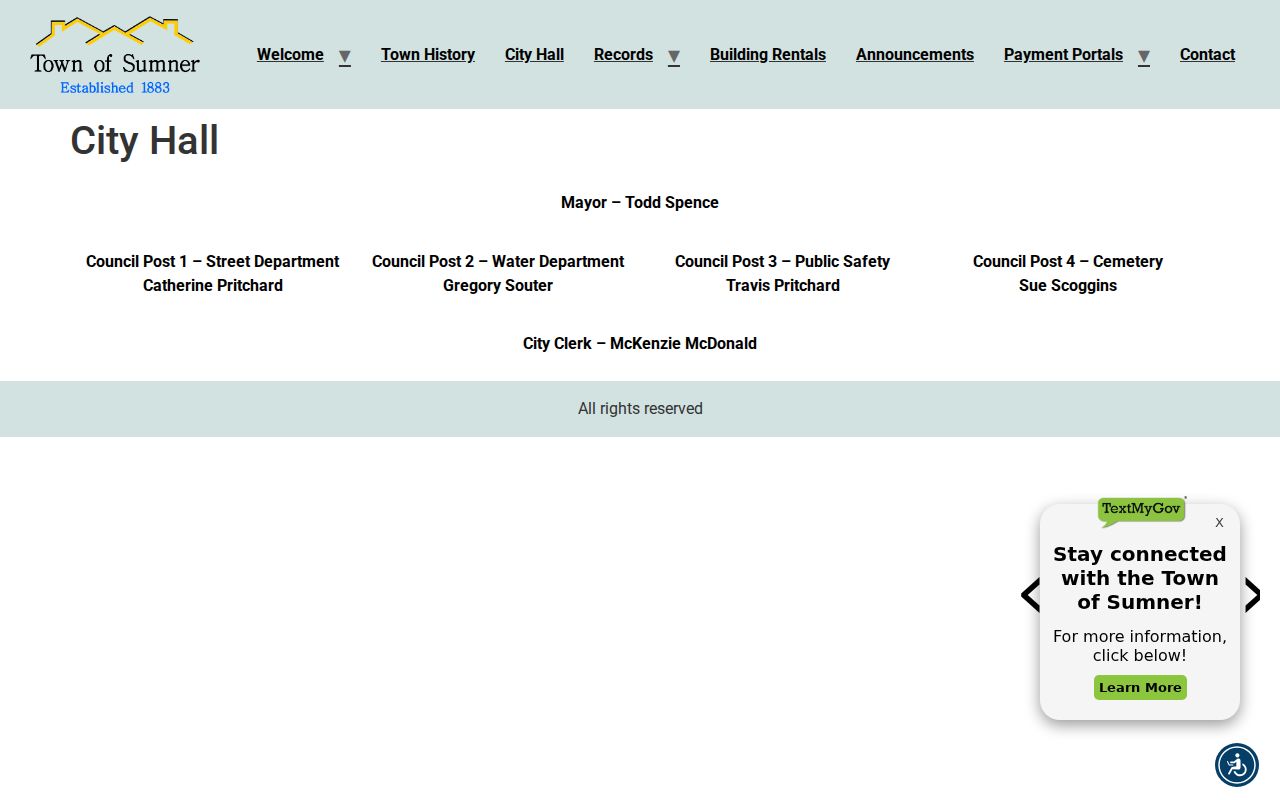
Sumner Town Hall can tell you which office actually holds a warrant record. An address alone settles nothing. A citation from a Sumner stop might name a county or state agency. The warrant itself could come from Worth Superior Court, State Court, Magistrate Court, another county, or federal court. Read the papers. The issuer named there, not a Sumner street address, decides where your inquiry belongs.
Sumner Warrant Records: What They Show
A Sumner warrant record follows no single public format. When an authorized town or county custodian confirms a match, ask for the core fields that identify the record and show its current status. That quick check keeps people with similar names from being confused.
| Case or warrant number | The issuing office's reference, recorded as OFFICIAL CASE NUMBER, not a guessed format. |
|---|---|
| Subject identity | Legal name and only the added identifier needed to prevent a mistaken match. |
| Charge or citation | The allegation tied to the process, not a finding of guilt. |
| Issuing court | The court controlling status and any recall or quash decision. |
| Bond or fine | An amount only when the current court or Sheriff confirms it. |
| Status | Active, served, recalled, quashed, or the exact status the holder reports. |
Warrant status can shift after one call. Note when you checked. Ask which order, receipt, or docket entry proves any later change. A "no record" answer from a Sumner office only means that office found no match from the details you supplied.
Sumner Ticket and Warrant Limits
Sumner has no official traffic-ticket portal or payment page. Don't borrow a screen from another Worth County city. And don't assume State Court payment methods cover a town citation until Town Hall or the issuing court says so. The agency and court printed on the citation are your best clues. Georgia Courts reports no centralized statewide traffic-citation database. Even if a vendor finds your ticket, that match does not confirm a bench warrant or FTA order. Paying is not proof a judge recalled the warrant. A date-passed ticket needs direct instructions from the controlling court.
- Ask which court owns the citation.
- Confirm whether its date has passed.
- Request the exact FTA or warrant status.
- Ask which payment methods are authorized.
- Obtain proof of a recall or new setting.
If Worth State Court is named, use its official clerk route. Its traffic page requires payment before the court date and offers mail, phone, and office methods. Those rules belong to State Court, not to any unverified Sumner process.
Sumner Warrants and Worth County
How a Sumner matter routes through Worth County depends on the issuing office. A town citation follows the route Town Hall confirms. State Court takes county misdemeanors and traffic cases. Magistrate Court handles warrant applications. Superior Court handles felonies, and its Clerk keeps superior criminal filings and criminal warrants, while the Sheriff serves county process and answers county inquiries.
Warrant flow: Sumner Town Hall or identified local court › Worth County Sheriff or issuing county court › Georgia law-enforcement systems
Georgia runs no public statewide warrant-search system. The state points people to local sheriffs. A sheriff generally holds only that county's information. If Town Hall identifies a county matter or cannot confirm jurisdiction, use the Worth County warrant records overview and the Worth County warrant check. A federal matter takes another route. Another county's warrant stays in that county. Ask each office to state the jurisdiction in full. That keeps a Sumner address from being the sole, often wrong, basis for choosing a custodian.
Sumner Warrant County Fallbacks
For an existing county warrant or an unknown county-level issuer, the Worth County Sheriff is the practical fallback. Its Warrants Division channel sits at 201 North Main Street, Room 14, Sylvester, telephone 229-776-8211. The county posts no public active-warrant search and no set warrant-line hours. Call first. Georgia guidance warns that walking in can mean immediate custody. For county traffic or misdemeanor FTA, Worth State Court answers at 229-776-8205 in Room 13. Superior criminal warrant files route through the Clerk of Superior Court. An inmate database is not a warrant search, since it shows who is already detained rather than each unserved Sumner warrant.
- FTA
- Failure to appear for a required setting.
- Recall
- A court action withdrawing its warrant.
- Quash
- A judicial order setting a warrant aside.
- Served
- Law enforcement executed the process, though the case may remain open.
Ask the official to name the court, document type, status, and next safe step. No Worth source promises that payment, bond, a reset, or an attorney motion resolves every Sumner case.
Accessing Sumner Warrant Records
Georgia law opens with access to public records, subject to exemptions, redaction, and reasonable fees. For a Sumner-held record, ask Town Hall first. State guidance allows an oral or written request, and no special statutory form is required. Name the exact citation, warrant, return, recall order, or disposition you need. A records request gets you a releasable copy; it is not instant status confirmation.
Key rules:
Georgia Open Records Act, O.C.G.A. §§ 50-18-70 and 50-18-71 creates the access framework, subject to lawful limits and fees.
O.C.G.A. § 50-18-72(a)(4) may limit records tied to a pending investigation or prosecution.
O.C.G.A. § 15-11-701 reflects special confidentiality and sealing rules for juvenile records.
If the record sits with the Sheriff, the open-records address is openrecords@worthcosheriff.com. Sheriff sources also publish records@worthcosheriff.com elsewhere, so confirm the address before sending personal data. Ask for non-exempt portions and the legal basis for each denial or redaction.
Sumner Population and Warrant Context
The Worth County and cities joint comprehensive plan lists a 2020 Census population of 445 for Sumner. That number confirms the town's standing among the county's four incorporated municipalities. Nothing more. It does not measure warrant volume, court workload, public safety, or any resident's odds of having a warrant. Sumner publishes no official warrant count, amnesty event, active-warrant list, or update schedule. Don't fill that gap with names, photos, rumors, or stale third-party lists. A sound Sumner check stays tied to your own case, a family matter you may help with, or a specific document requested from its custodian. For civic research, ask whether non-exempt annual counts can be produced without personal names. Define the date range, court, warrant type, and whether recalled or served matters count. Population should never stand in for records data.